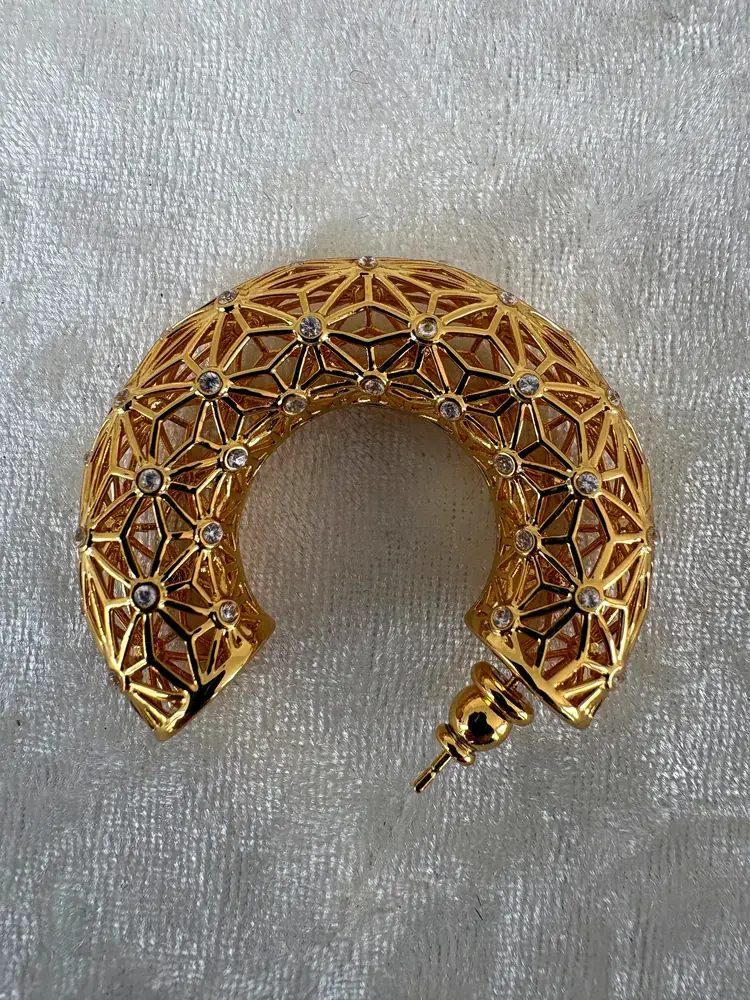
How a PVD layer is applied
PVD (physical vapour deposition) happens in a vacuum chamber. Metal targets are vaporised by an arc or a sputtering source, and the vapour condenses onto the part as a layer 0.3-0.5 microns thick. Because the coating is deposited atom by atom rather than electrochemically, it follows the substrate exactly - fine texture stays fine, sharp edges stay sharp - and there is no bath chemistry to trap hydrogen or leave residue in blind holes.
Colour comes from the target composition and the reactive gas. Titanium with nitrogen gives the classic gold; adding carbon shifts it to gunmetal and black; a bronze target with controlled gas flow gives the antique bronze that most of our dog-hook and buckle customers ask for.
PVD at a glance
| Parameter | Capability |
|---|---|
| Coating thickness | 0.3-0.5 um (decorative), up to 3 um (wear grades) |
| Hardness | 1,500-2,500 HV depending on the layer system |
| Colours | Gold, champagne gold, gunmetal, black, antique bronze, rose gold |
| Substrates | Stainless steel 316L, titanium, tool steel, brass, zinc alloy |
| Adhesion | Passes cross-hatch and tape pull after correct pre-cleaning |
| Corrosion | Salt spray 48-96 h depending on substrate and layer, tested in-house |
| Topcoat | Not required - no lacquer to yellow or wear through |
| Lead time | 3-7 working days after the parts are finished |
| Minimum order | 1 piece for samples; batch pricing from 100 pieces |
The comparison buyers actually care about
- ✓Harder than hard chrome - roughly 4x in wear tests
- ✓No cyanide or hexavalent chromium in the process
- ✓Colour does not fade because there is no organic topcoat
- ✓Thin enough to keep 0.5 mm text and sharp edges crisp
- ✓Works on printed, cast and machined substrates
- ✓Batch-to-batch colour controlled against a signed master sample
PVD is a line-of-sight process: a surface the plasma cannot see does not get coated. Deep blind holes and internal channels stay uncoated by design, so if a hidden face needs colour, tell us and we will plan the fixturing around it.
Frequently asked questions
How long does a PVD coating last?
On a decorative part that is handled daily, years - the layer is harder than the steel beneath it and cannot peel the way plating can. What eventually shows is wear through the coating at the highest contact points, not colour loss. Our salt spray tests run 48-96 hours depending on the layer system.
Can you match a specific gold colour?
Yes, within a range. We coat a master sample, you approve it, and every later batch is checked against that signed master under a defined light source. Small batch-to-batch drift is inherent to the process; an approved master is how we control it.
Does PVD change the dimensions of the part?
By less than a micron per surface, so no - except on precision fits. If a bore has a tolerance tighter than 0.01 mm, mask it or plan the coating into the drawing.
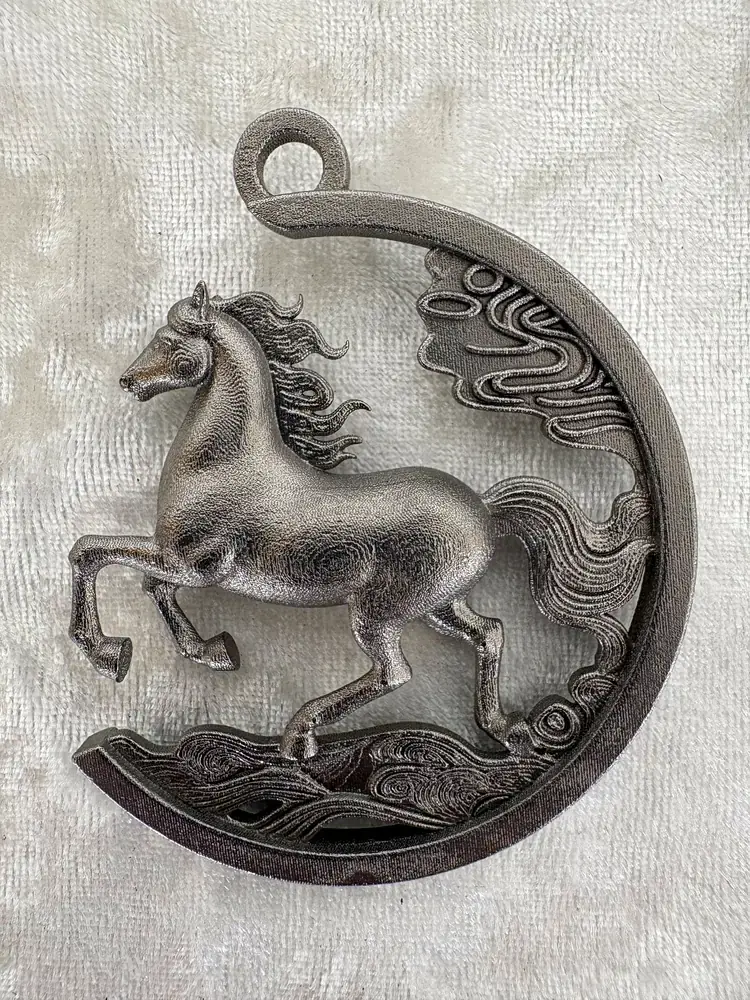
Can 3D printed parts be PVD coated?
Yes, and this is where PVD beats plating most clearly: an as-printed surface has texture that electroplating exaggerates, while PVD reproduces it. Blast or polish first, then coat.
Get your quote within 48 hours
Upload a 3D file (STL, STEP, OBJ, 3MF) or just a photo / drawing. An engineer checks printability, flags anything that will not print, and replies with a clear price breakdown within 48 hours. From one prototype to 1,000+ pieces.
Prefer email? dimension3dHAN@gmail.com