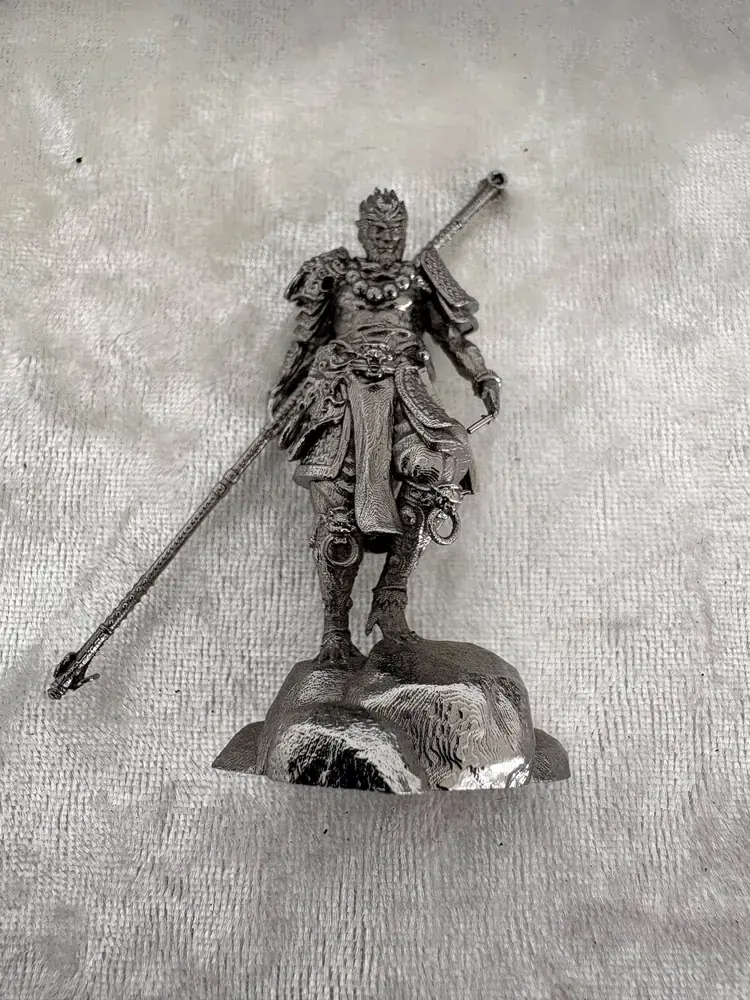
Why 316L is the default metal
316L is an austenitic stainless steel with 2-3% molybdenum, which is what separates it from 304: it resists chlorides, so it survives seawater, salt spray and cleaning chemicals that pit cheaper grades. Printed and stress-relieved, it reaches 550-650 MPa with 30-40% elongation - less strong than titanium, but far more forgiving and much easier to finish.
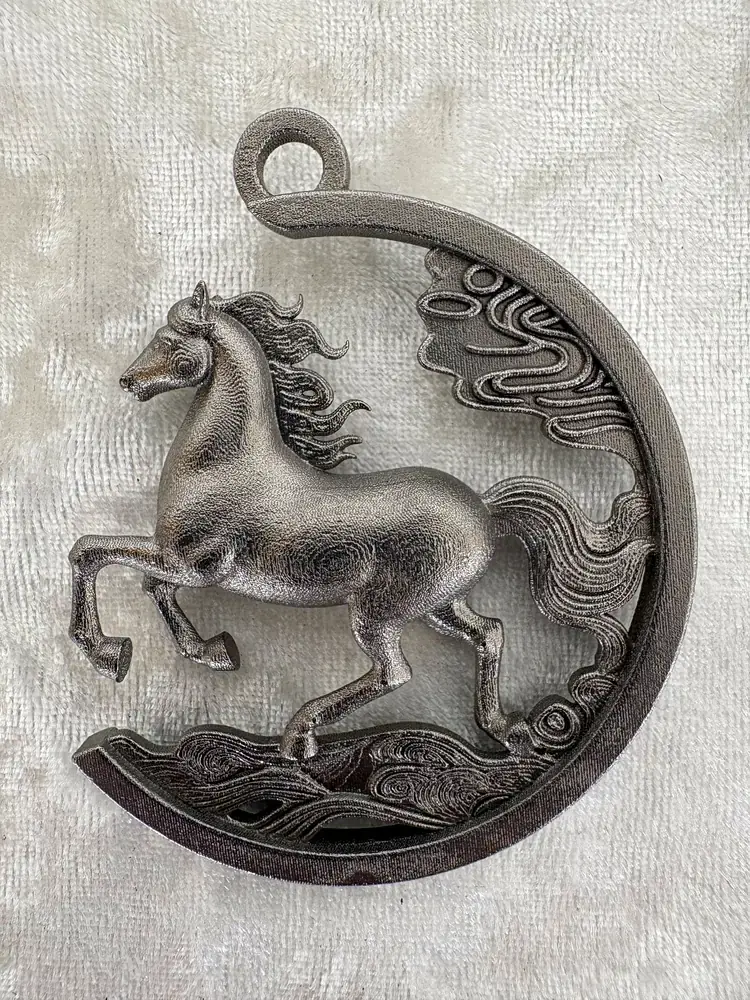
It is also the most practical metal for decorative work. 316L takes a high mirror polish, holds fine detail at 0.4 mm, and after polishing we can apply a PVD gold, black or gunmetal coating that will not flake the way electroplating can.
316L at a glance
| Parameter | Capability |
|---|---|
| Density | 8.0 g/cm3 |
| Tensile strength | 550-650 MPa after stress relief |
| Elongation | 30-40% |
| Hardness | 20-25 HRC (as printed) |
| Corrosion | Very good - chlorides, seawater, food acids |
| Magnetic | Non-magnetic in the printed state |
| Finishing | Mirror polish, vibration polish, sand blast, PVD gold / black / gunmetal |
| Lead time | 5-8 working days |
Where 316L fits
- ✓Jewellery, medallions and keychains that get PVD coated
- ✓Marine and outdoor hardware
- ✓Food processing and pharmaceutical equipment
- ✓Pump, valve and manifold components
- ✓Architectural models and display pieces
- ✓Custom fasteners and fittings for small batches
Need it lighter? See aluminium. Need higher strength and corrosion in one part? See titanium.
Frequently asked questions
Is 316L food safe?
316L is widely used in food and pharmaceutical equipment because it resists acidic and chloride cleaning agents. For direct food contact, specify a polished finish rather than as-built: the rougher surface traps residue.
Can 316L be welded after printing?
Yes, it welds well by TIG with 316L filler. We routinely print parts in sections and join them for sizes over the 250 mm build envelope.
How does 316L compare with 304 for printed parts?
304 is not commonly available as a printing powder and it pits in chloride environments. 316L is the standard choice for additive manufacturing and the price difference is small - we do not recommend 304 for anything that sees salt or cleaning chemicals.
Get your quote within 48 hours
Upload a 3D file (STL, STEP, OBJ, 3MF) or just a photo / drawing. An engineer checks printability, flags anything that will not print, and replies with a clear price breakdown within 48 hours. From one prototype to 1,000+ pieces.
Prefer email? dimension3dHAN@gmail.com