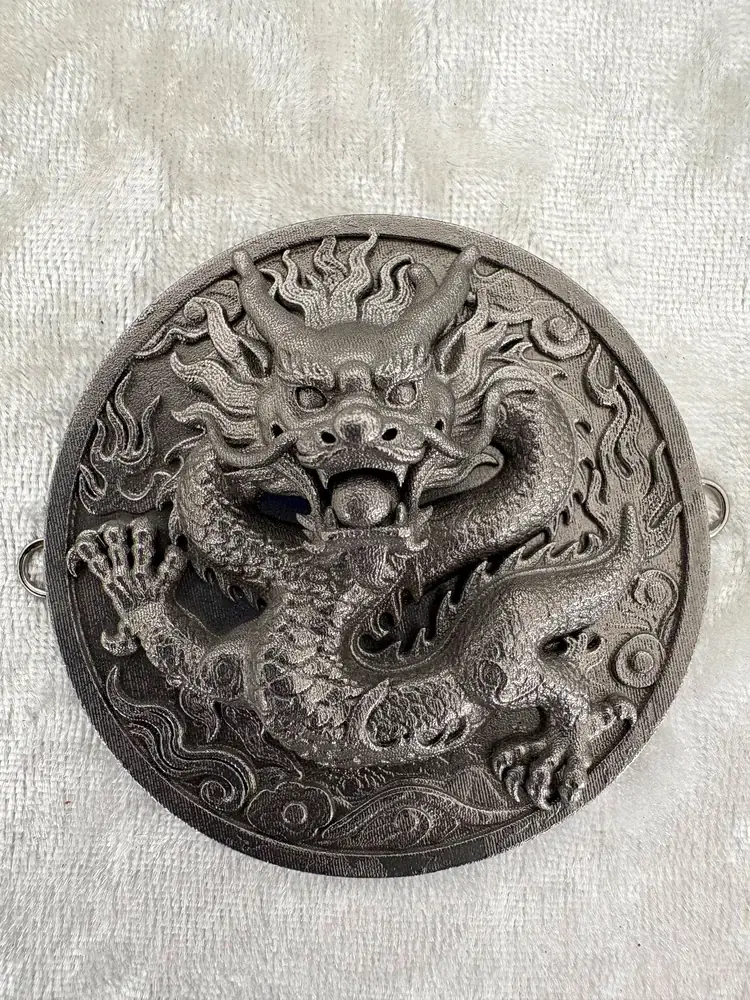
Maraging steel, aged to hardness
1.2709 is an 18% nickel maraging steel supplied as a fine powder. It prints soft and machines easily, then a single aging treatment at about 490 C for 6 hours takes it to 50-54 HRC with very little dimensional movement - roughly 0.05%, which is why it holds tolerance through heat treatment better than most tool steels.
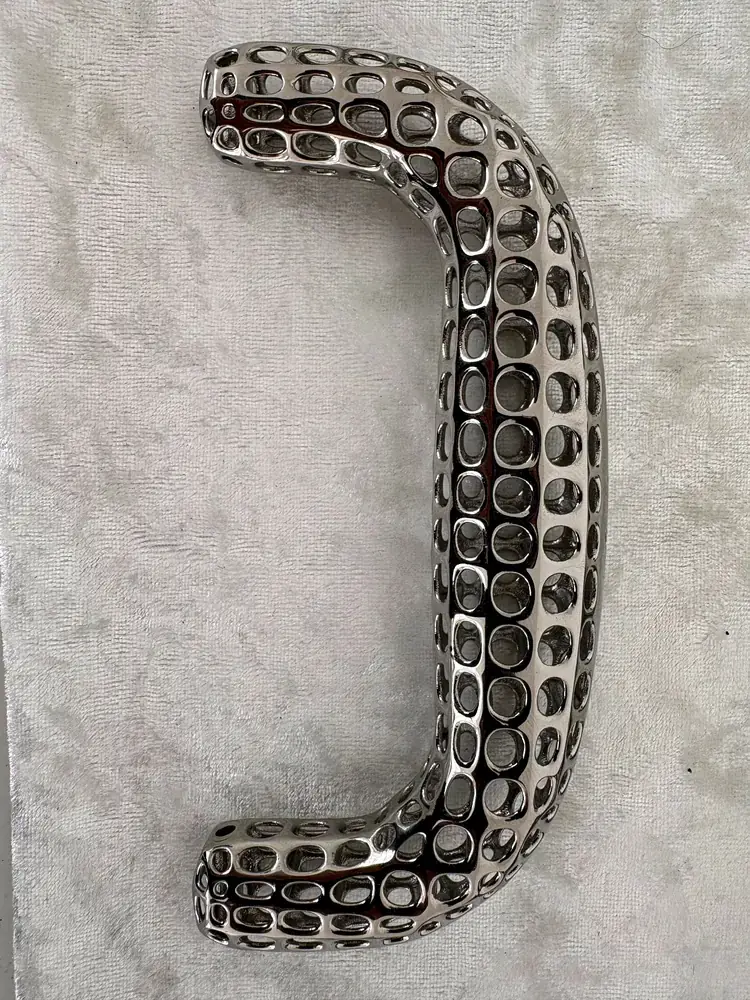
The commercial case is conformal cooling. A drilled channel sits 15-20 mm from the cavity wall and cools in straight lines; a printed channel follows the wall at a constant 4-6 mm and can split into branches. On a typical injection mould that cuts cycle time by 20-40% and reduces warpage, which is usually worth more than the insert costs.
1.2709 at a glance
| Parameter | Capability |
|---|---|
| Density | 8.1 g/cm3 |
| Tensile strength | ~1,100 MPa after aging |
| Hardness | 50-54 HRC after aging at 490 C |
| Dimensional change in aging | ~0.05% - allows finishing before heat treatment |
| Thermal conductivity | ~15 W/mK |
| Corrosion | Moderate - requires protection in humid storage |
| Finishing | Machining, EDM, mirror polish, nitriding |
| Lead time | 8-12 working days including aging |
Where tool steel pays back
- ✓Injection mould inserts with conformal cooling
- ✓Die casting dies and shot sleeves
- ✓Hot stamping and embossing tooling
- ✓Wear parts and cutting guides
- ✓Small-series production moulds
- ✓Functional prototypes of tooling before committing to steel
For prototype moulds in low volumes we may suggest aluminium instead - cheaper, faster, and good for a few thousand shots.
Frequently asked questions
Can a printed mould insert really last as long as a machined one?
For most commodity plastics, yes - 50-54 HRC maraging steel behaves like a good P20-class insert. The difference shows up with abrasive or glass-filled materials and with very high shot counts, where a machined H13 insert still wins on fatigue life.
How much does conformal cooling actually save?
On a typical injection mould we see 20-40% cycle time reduction and a measurable drop in warpage, because the cooling follows the part instead of the machining axis. The insert usually pays back within one production run.
Does the part need stress relief before aging?
Yes. We stress relieve after printing and before aging, otherwise the insert can distort during heat treatment. Both steps are included in our standard process and in the quotation.
Get your quote within 48 hours
Upload a 3D file (STL, STEP, OBJ, 3MF) or just a photo / drawing. An engineer checks printability, flags anything that will not print, and replies with a clear price breakdown within 48 hours. From one prototype to 1,000+ pieces.
Prefer email? dimension3dHAN@gmail.com