Four grits, then a wheel
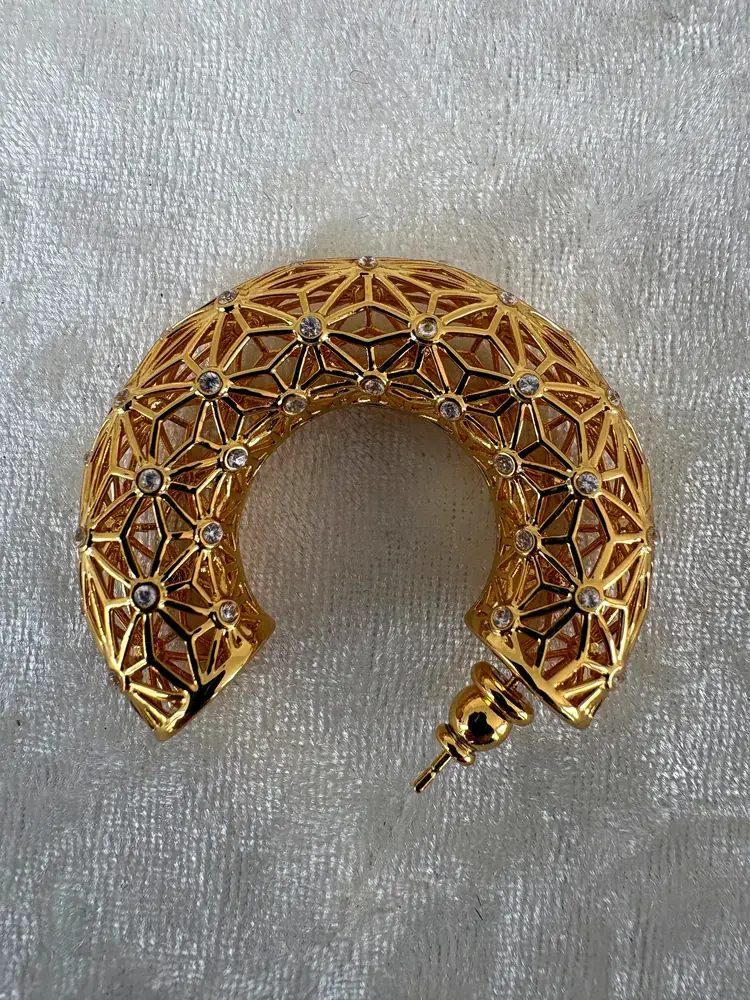
Polishing is a sequence, not a single operation: 400, 800 and 1,500 grit to remove the layer lines and the blasting texture, then a stitched cotton wheel with compound to bring up the gloss, then a soft wheel for the final reflection. On a complex printed surface - a lattice, a filigree, a fine relief - most of the time goes into reaching the inside of the geometry.
Because it is hand work, it is priced by surface area and complexity, and it is where a printed part stops looking printed. Note the design implication: a face that will be mirror polished should not be a support contact face, and deep narrow slots cannot be reached at all.
Mirror polishing at a glance
| Parameter | Capability |
|---|---|
| Result | Ra 0.05-0.1 um, reflective; true mirror on flat and convex faces |
| Substrates | Stainless steel 316L, titanium, brass, aluminium |
| Sequence | 400 / 800 / 1,500 grit, then stitched wheel, then soft wheel |
| Reachable geometry | Open surfaces, convex curves, edges; not deep narrow slots |
| Design rule | Leave 0.1-0.2 mm of stock on faces to be polished |
| Pairing | Almost always followed by PVD gold, black or gunmetal |
| Lead time | 3-6 working days depending on complexity |
| Pricing | Per surface area and complexity, not per part |
How to design for a mirror finish
- ✓Keep polished faces free of support contact marks
- ✓Allow 0.1-0.2 mm stock on faces that will be polished
- ✓Avoid slots narrower than 1.5 mm - the wheel cannot reach
- ✓Blend radii generously; a sharp internal corner cannot be polished
- ✓Specify which faces need the mirror and which can stay satin
- ✓Plan the PVD step in the same drawing - polish quality is visible through the coating
For batches above a few hundred pieces, we usually start with vibration polishing and hand-finish only the critical faces - it keeps the cost sane without giving up the look.
Frequently asked questions
Can every printed surface be mirror polished?
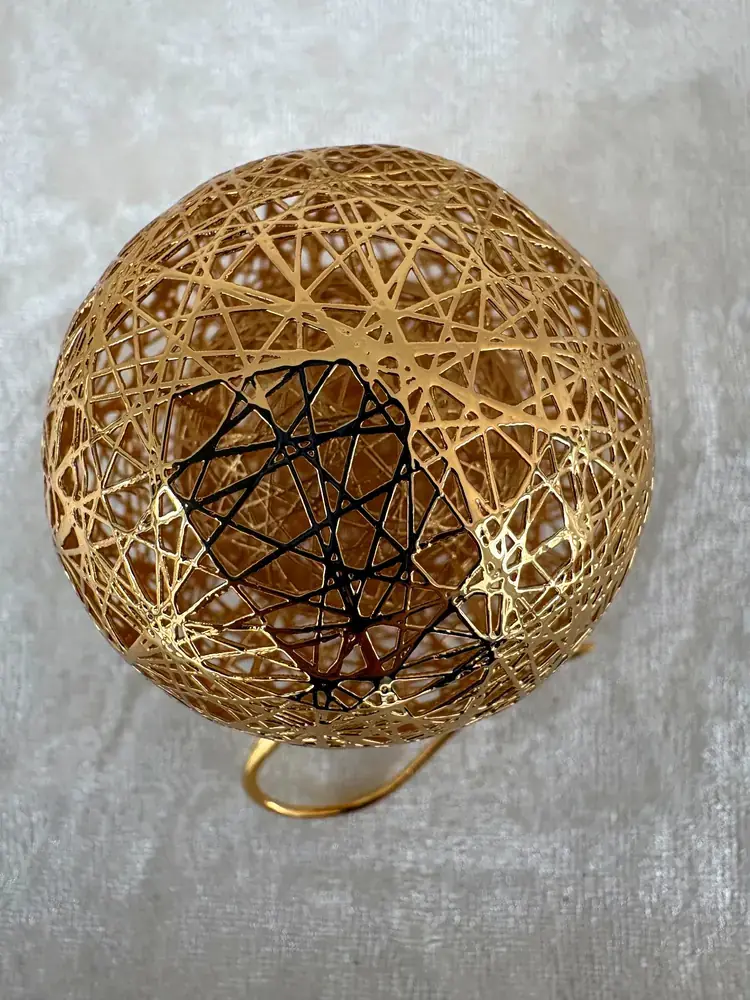
No. Internal lattices, deep narrow slots and sharp internal corners are unreachable by a polishing wheel. On those parts we finish what can be reached and blast the rest, or redesign the geometry so the visible faces are accessible.
How much does mirror polishing add to the price?
On a simple medallion, 20-40% of the part cost. On a fine lattice or filigree part it can double it, because the work is manual and slow. We quote it separately so you can decide face by face.
Does polishing before PVD improve durability?
Yes, in two ways: a smooth substrate has no scratches for the thin layer to telegraph, and there are no sharp edges where coating adhesion fails first. Polished-and-coated parts consistently outlast blasted-and-coated parts in wear testing.
Get your quote within 48 hours
Upload a 3D file (STL, STEP, OBJ, 3MF) or just a photo / drawing. An engineer checks printability, flags anything that will not print, and replies with a clear price breakdown within 48 hours. From one prototype to 1,000+ pieces.
Prefer email? dimension3dHAN@gmail.com